
Laser Dentistry Melbourne
The Remarkable Power of Light
Many dentists still rely on traditional tools, such as scalpels, to perform important surgical procedures. While such instruments are effective, they have their disadvantages. That is why Dr. Rowley has invested in a better alternative: laser dentistry. Using the advanced LightScalpel Laser, our Melbourne team can harness the remarkable power of light and perform easier, faster treatment of tongue tie. Continue reading below to learn more about this amazing technology, or contact us directly if you have questions.
Why Choose Rowley Family Dentistry for Laser Dentistry?
- Advanced LightScalpel CO2 Laser
- Highly Skilled Dentist & Team
- Easier, More Precise Treatment
What Are Dental Lasers?
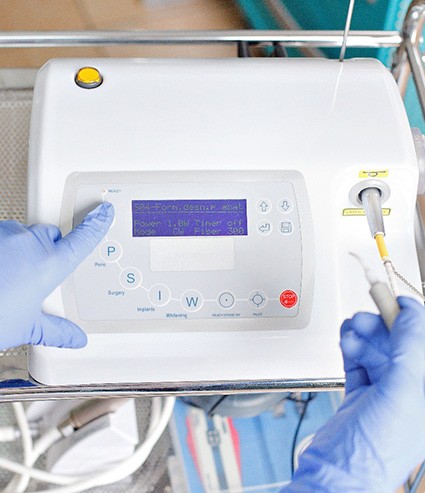
A laser is essentially a highly concentrated beam of light. Lasers have many applications across different industries. In dentistry, soft tissue lasers are often used to perform surgical procedures on the mouth’s soft tissues.
In our office, we use the LightScalpel Laser, which harnesses the power of CO2 to create a beam that can effectively cut soft tissues. It is remarkably precise and consistently contributes to desirable results for patients.
Types of Laser Dental Treatments

Lasers have several applications in dentistry. In our practice, we focus on using this technology to treat cases of tongue tie. If we suggest this treatment for you or your child, you can be confident that the tools we use will contribute to a comfortable care experience and a positive outcome.
Tongue Tie Treatment

Tongue tie is a condition that occurs when the tissue that connects the tongue to the floor of the mouth is too short or thick, thereby restricting the tongue’s movement. With our LightScalpel Laser, we can quickly modify or remove this tissue so the tongue can function better. This can improve oral health and reduce the risk of future complications.
The Benefits of Laser Dentistry

Laser dentistry offers some outstanding benefits:
- Recovery time tends to be faster after laser treatment compared to traditional methods.
- The laser effectively kills bacteria, which minimizes the risk of sedation.
- Lasers cauterize tissue, so there is minimal bleeding.
- Laser treatment is remarkably comfortable; in some cases, it can even eliminate the need for local anesthesia.
- The precision of lasers makes procedures as minimally invasive as possible.